Moving past supine…
First off, I loved the course! If it wasn’t part of the challenge, I likely would have looked past it-so thanks a million for having the foresight to know I needed this.
I have a question regarding the supine guard: how do the principles change when transitioning to other open guards, like the seated guard? I’m guessing the core structure remains similar?
In Ground 0, I’m still monitoring the 'pass box' and keeping my elbows tight. In Ground 1, I’m watching my 'headlights,' kickstanding with my hands, and keeping my frames inside. For Ground 2, I’m focused on squaring up, and in Ground 3, I’m keeping the opponent directly in front of me.
I assume the basic structure stays the same regardless of the specific guard, and supine was simply the primary example. Is that correct? Also, do you recommend starting rolls in a supine position to get better at utilizing this retention system?
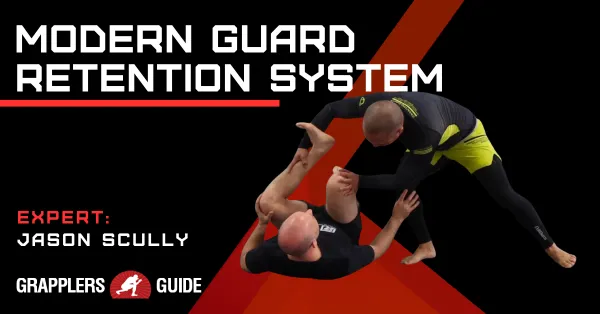
Linked Course
Modern Guard Retention System
6 Comments
Not Jason, but I think the priniciples still apply for seated "guard" though the whole course is focused on a disengaged opponent/partner. It's stated several times that the primary objective should be getting to an established guard (with connections and frames). So you only really have two options, supine or seated. I think the kickstand principle is the only real thing that would have to be adapted in this scenarion and replaced with switching from butt cheek to butt cheek with your 90 degree bent leg acting as the kickstand. But the passbox/headlights/framing concepts would all carry over.
@Pred500 Thanks for your thoughts. I guess to practice, I would start rolling from supine, but ideally, supine is a last resort before reaching the primary objective of getting to an established guard.

Maybe seated guard should come before supine guard. In seated guard you want to keep your opponent in headlights. It should be easy as you just butt scoot and turn. You keep the distance with on foot and your arm or arms depending on how you sit. In seated guard you have a better chance to grip and attack compared to supine. In supine you can get your guard when opponent comes closer. In seated guard you can also attack. BUT passbox/headlights/framing will carry over in a way.
@crossover I appreciate the insight. It sounds like supine is a vital "safeguard" position when disengaged, rather than a primary starting point. Practicing it makes sense since the core concepts (passbox, headlights, and framing) are universal across most open guards.
I have been viewing arm saddle course. It is a nice add to guard play.
@crossover awesome- I’ll look into it as well:)